
.svg)
Choose your language
Elige tu idioma
Knee pain, instability, or stiffness can quietly take over daily life, whether it stems from a sudden ACL tear on the field, a meniscus injury, or years of wear from arthritis. SportMed's knee program in Guadalajara and Nuevo Vallarta covers the full spectrum of care, from minimally invasive arthroscopy and ACL reconstruction to regenerative stem cell therapy and joint replacement, guided by Dr. Francisco Arroyo, a FIFA & FIMS certified specialist with over 25 years of orthopedic experience, and supported by personalized physiotherapy so patients can move confidently again.
)%20-%2047.png)
Focus Area: Arthroscopy | ACL Reconstruction | Meniscus Repair | Stem Cell Therapy | Knee Replacement | Guadalajara | Nuevo Vallarta | Mexico
Knee surgery is a broad category of procedures used to diagnose and treat problems affecting the bones, cartilage, ligaments, and tendons of the knee joint. It ranges from minimally invasive arthroscopic procedures, in which a small camera and instruments are used through tiny incisions to repair a torn meniscus or reconstruct a torn ACL, to regenerative options like stem cell therapy, and more extensive procedures such as partial or total knee replacement for advanced arthritis. The right type of knee care depends on the specific diagnosis, the extent of joint damage, and the patient's activity level and goals, which is why an accurate diagnosis is the essential first step at SportMed.
Arthroscopy is the foundation of most modern knee surgery. A small camera, called an arthroscope, is inserted through a tiny incision so the surgeon can see directly inside the joint on a monitor, while miniature instruments work through one or two additional small incisions. Because arthroscopy avoids the large incisions of traditional open surgery, patients typically experience less pain, less scarring, a lower risk of complications, and a faster return to daily activity. At SportMed, arthroscopy is used to repair torn menisci, reconstruct the ACL, remove loose or damaged cartilage fragments, and address inflamed joint lining, often on an outpatient basis.
The anterior cruciate ligament (ACL) is one of the main stabilizing ligaments of the knee, and it's among the most commonly injured structures in sports that involve pivoting, sudden stops, or jumping. Patients often describe a "pop" at the moment of injury, followed by swelling and a feeling that the knee is giving way or unstable, especially during side-to-side movement. While a partial tear or a low-demand lifestyle may be managed without surgery, most athletes and active patients with a complete ACL tear benefit from reconstruction to restore stability and protect the knee from further injury, including damage to the meniscus and cartilage.
ACL reconstruction is performed arthroscopically, using a tissue graft, either taken from the patient's own hamstring or patellar tendon, or from donor tissue, to rebuild the ligament. The graft is threaded through small tunnels drilled in the shin and thigh bones and secured in place, recreating the ACL's original anatomy and function. Recovery is progressive: early weeks focus on controlling swelling and restoring motion, followed by months of structured physiotherapy to rebuild strength, balance, and control before a gradual, supervised return to sport, typically over the course of six to nine months.
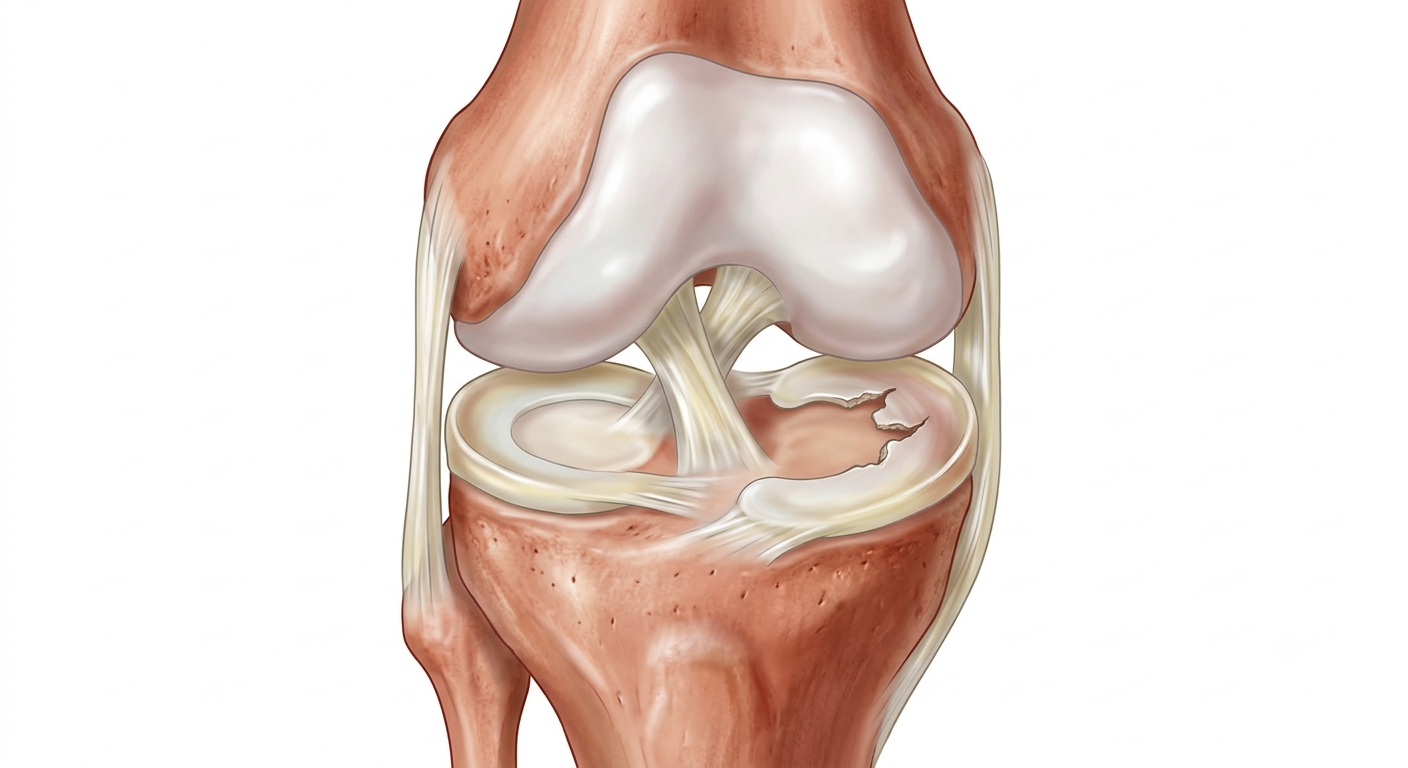
The meniscus is a C-shaped piece of cartilage that cushions and stabilizes the knee joint, and each knee has two: one on the inner (medial) side and one on the outer (lateral) side. Meniscus tears can happen suddenly, from a twisting movement during sports, or gradually, as the tissue weakens with age and becomes more prone to tearing during everyday activities. Common symptoms include pain along the joint line, swelling, and a sensation of catching, locking, or the knee giving way.
Treatment depends on the tear's size, shape, and location. Small, stable tears, especially degenerative ones in older patients, often improve with physiotherapy and activity modification alone. Tears in the meniscus's outer, blood-supplied region are frequently good candidates for arthroscopic repair, where the torn edges are stitched back together to preserve as much of the meniscus as possible, since the meniscus plays an important long-term role in protecting the joint's cartilage. When a tear can't be repaired, a partial meniscectomy, arthroscopically trimming away only the damaged tissue, relieves mechanical symptoms while preserving healthy meniscus wherever possible.
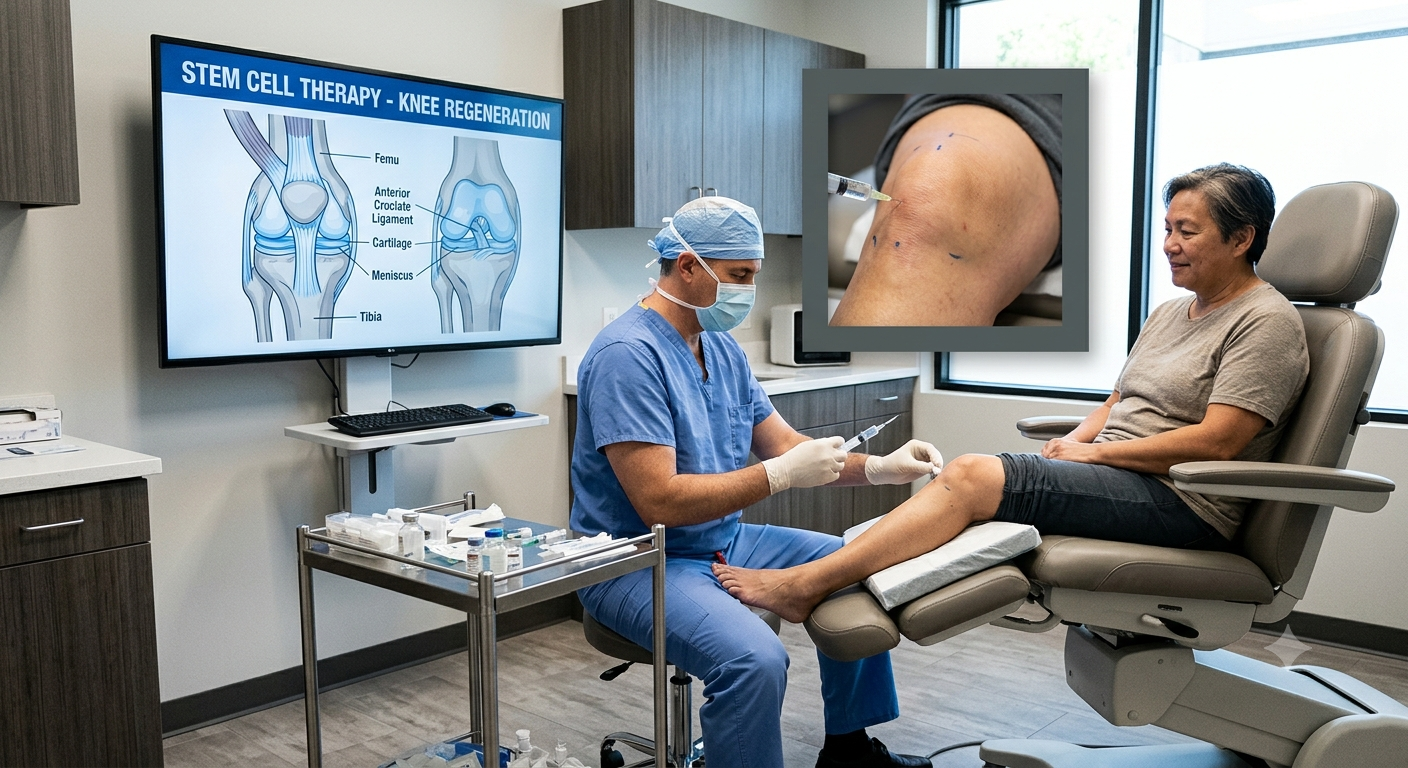
Stem cell therapy is a regenerative treatment option that uses umbilical cord-derived mesenchymal stem cells (MSCs), concentrated before being injected directly into the knee joint. These cells, along with other biologic factors in the injection, are thought to help calm inflammation and support the body's own tissue-repair processes. At SportMed, stem cell therapy is most often considered for patients with early-to-moderate knee arthritis, degenerative meniscus changes, or cartilage wear who want to reduce pain and improve function using a minimally invasive, non-surgical approach.
For some patients, stem cell therapy, often paired with PRP (platelet-rich plasma) and a structured physiotherapy program, can meaningfully ease symptoms and delay the need for more invasive surgery, sometimes by years, allowing them to stay active while postponing or potentially avoiding a procedure like knee replacement. It's important to set realistic expectations: stem cell therapy is not a substitute for surgery in cases of severe structural damage, such as a large unstable meniscus tear or advanced bone-on-bone arthritis, but for the right candidate, it can be a valuable part of a longer-term joint-preservation strategy. Your SportMed specialist will help determine whether you're a good candidate based on your imaging, symptoms, and goals.
You may be a candidate for knee surgery or a regenerative procedure if you have:
Outcomes depend heavily on the specific procedure performed. Patients who undergo arthroscopic meniscus repair often resume light daily activities within one to two weeks, while ACL reconstruction generally involves a phased recovery of six to nine months before a full return to sport. Stem cell therapy typically produces gradual improvement over several weeks to a few months, with many appropriate candidates experiencing reduced pain and better function that can last from months to a few years, sometimes allowing them to postpone more invasive surgery. Total knee replacement has a strong long-term track record, with the large majority of implants continuing to function well more than a decade after surgery. Your SportMed team will set expectations specific to your procedure so you know what a realistic recovery looks like.
Don't just take our word for it, hear directly from patients we've helped get back to the activities they love, in the Patient Stories section of our homepage.
Knee arthroscopy is a minimally invasive procedure that uses small incisions and a camera to repair specific structures like the meniscus or ACL, with a relatively fast recovery. Knee replacement is a more extensive procedure that resurfaces part or all of the joint, typically reserved for advanced arthritis that hasn't responded to other treatments.
ACL reconstruction is an arthroscopic procedure that rebuilds the torn ligament using a tendon graft, secured through small tunnels in the shin and thigh bones. Recovery is progressive, starting with swelling control and range-of-motion work, followed by months of strength and balance training, with most patients returning to sport around six to nine months after surgery under guided supervision.
For appropriate candidates, particularly those with early-to-moderate arthritis or degenerative meniscus changes, stem cell therapy can reduce pain and improve function enough to meaningfully delay, and sometimes avoid, more invasive surgery. It isn't a substitute for surgery in cases of severe structural damage, so your specialist will evaluate your imaging and symptoms to see if you're a good fit.
A meniscus repair stitches the torn edges of the meniscus back together and is typically possible for tears in the meniscus's outer, blood-supplied region, preserving the tissue's long-term protective role. A partial meniscectomy instead trims away only the damaged portion when a repair isn't feasible, relieving mechanical symptoms like catching or locking while preserving as much healthy meniscus as possible.
Ready to feel your best again? Book your first session with SportMed and take the first step toward a pain-free, active life.

Get expert orthopedic and sports medicine care right in Guadalajara. Our experienced team is here to help you restore mobility, reduce pain & get back to doing what you love.
