Health library >
Ligament Reconstruction
Service Details

Ligament Reconstruction

A torn ligament, most often the ACL, can leave a joint feeling unstable and unreliable during everyday movement, let alone sport. SportMed's ligament reconstruction program in Guadalajara and Nuevo Vallarta rebuilds damaged ligaments using proven graft techniques and personalized rehabilitation, guided by Dr. Francisco Arroyo, a FIFA & FIMS certified specialist with more than 25 years of experience in orthopedics and biologic therapies, so patients can safely return to stable, confident movement.
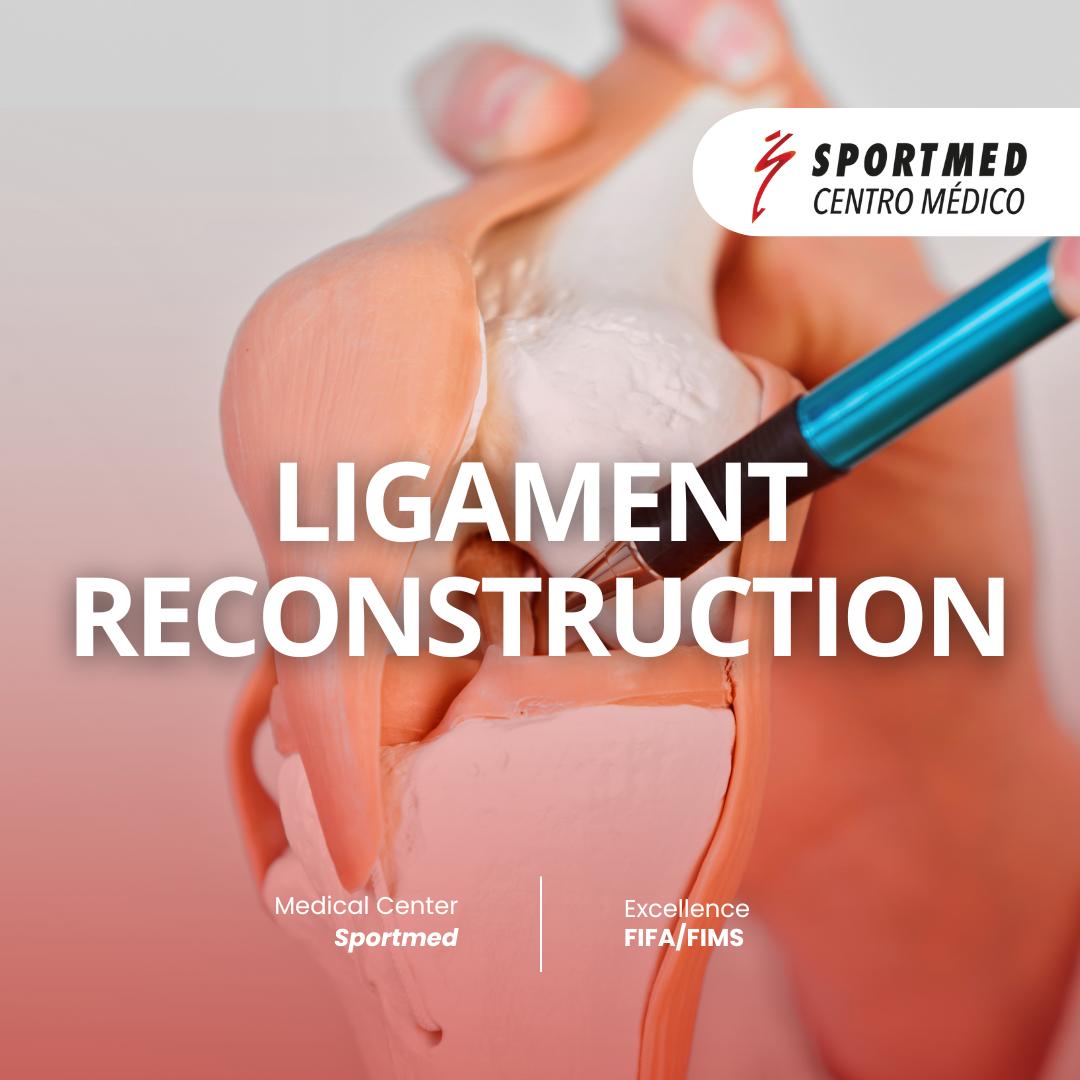
Ligament Reconstruction

Focus Area: ACL Reconstruction | Knee Ligaments | Sports Injuries | Ligament Surgery | Guadalajara | Nuevo Vallarta | Mexico

What Is Ligament Reconstruction?

Ligament reconstruction is a surgical procedure that rebuilds a torn ligament, most commonly the anterior cruciate ligament (ACL) in the knee, using a graft of tendon tissue in place of the damaged ligament. Because torn ligaments generally cannot simply be stitched back together and expected to hold up under normal stress, reconstruction replaces the torn tissue with a new graft, taken either from the patient's own body or from a donor, and anchors it into the bone to restore the joint's stability. While ACL reconstruction is the most frequently performed ligament procedure, the same general approach applies to other ligaments in the knee, shoulder, and ankle when stability cannot be restored through rehabilitation alone.

Are You a Candidate for Ligament Reconstruction?

You may be a candidate for ligament reconstruction if you experience:

  • A knee or joint that repeatedly gives way, buckles, or feels unstable during walking, pivoting, or sports
  • A diagnosed ligament tear, often from a sports injury, sudden twist, or direct impact, confirmed through physical exam and imaging
  • Ongoing instability that limits participation in sports or physically demanding work despite a course of physical therapy
  • A desire to return to an active lifestyle, competitive sport, or physically demanding profession that requires full joint stability

Why Choose SportMed for Ligament Reconstruction

  • Experienced sports medicine leadership: Dr. Francisco Arroyo brings FIFA & FIMS certification and more than 25 years of experience treating the ligament injuries common among athletes and active patients.
  • Comprehensive, multidisciplinary care: Orthopedic surgery, sports medicine, physiotherapy, and functional nutrition work together to support both the surgical repair and the demanding rehabilitation that follows.
  • Personalized graft and rehabilitation planning: Graft choice and the pace of rehabilitation are tailored to your age, activity level, and sport-specific goals rather than a one-size-fits-all timeline.
  • Two locations across Mexico: Patients from Guadalajara, Nuevo Vallarta, and beyond can access the same coordinated ligament reconstruction program.
  • International patient support: Bilingual coordination helps patients traveling from other countries plan their surgery date, hospital stay, and recovery around their trip.

Your Treatment Journey

  1. Diagnosis and Imaging: Physical examination and MRI to confirm which ligament is torn and assess any associated cartilage or meniscus damage.
  2. Pre-Surgical Preparation: In many cases, a short period of physical therapy is used to reduce swelling and restore motion before surgery, which can improve outcomes.
  3. Graft Selection and Planning: Your surgeon discusses graft options and the surgical plan best suited to your anatomy and activity goals.
  4. Reconstruction Surgery: The torn ligament is removed and replaced with a graft, anchored into the bone using minimally invasive, arthroscopic-assisted techniques where appropriate.
  5. Early Rehabilitation: Guided physiotherapy begins soon after surgery to protect the graft while restoring motion and activating supporting muscles.
  6. Progressive Strength and Return to Sport: A phased rehabilitation program gradually rebuilds strength, balance, and sport-specific movement before clearing you for full return to activity.

What Results Can You Expect?

The great majority of patients who undergo ligament reconstruction regain a stable, functional joint that allows them to return to daily activities and, in most cases, their prior level of sport. Recovery is a gradual process: early motion and strength typically improve over the first six to eight weeks, continued strengthening extends over several months, and a full, supervised return to pivoting sports commonly falls in the range of nine to twelve months after surgery. Because ligament healing and graft maturation take time, following the phased rehabilitation plan closely is essential to a durable result.

Real Patients, Real Recoveries

Don't just take our word for it, hear directly from patients we've helped get back to the activities they love, in the Patient Stories section of our homepage.

Frequently Asked Questions

Why can't a torn ligament simply be stitched back together?

Ligaments like the ACL generally do not have enough blood supply to heal reliably when repaired directly, and simple repair often fails to restore the strength needed for pivoting or high-demand activity. Reconstruction replaces the torn tissue with a graft that can withstand normal joint stresses as it heals into place.

How soon after a ligament injury should reconstruction surgery happen?

Many specialists recommend addressing significant swelling and restoring knee motion first, then proceeding with reconstruction within a few months of the injury, since delaying surgery too long can increase the risk of further cartilage or meniscus damage.

What type of graft is used for ligament reconstruction?

Grafts are commonly taken from the patient's own hamstring or patellar tendon, or in some cases from a donor tendon. Your SportMed surgeon will recommend the option best suited to your anatomy, activity level, and goals.

How long until I can play sports again after ligament reconstruction?

Most patients need approximately nine to twelve months of structured, supervised rehabilitation before safely returning to competitive, pivoting sports, though lighter activities are typically reintroduced much sooner under your physiotherapist's guidance.

Are You a Candidate for Regenerative Therapy?

5 quick questions. Takes about 30 seconds.

Candidacy Score: 0
Question 1 of 5
How long have you been dealing with this issue?
Question 2 of 5
Have you already tried rest, physical therapy, or medication?
Question 3 of 5
Has a doctor ever mentioned surgery as a future option?
Question 4 of 5
What's your main goal right now?
Question 5 of 5
How would you describe your interest in regenerative medicine?
Result

Book Your Consultation

Why choose SportMed

βœ“
Board-certified surgeons
βœ“
Same-week consults
βœ“
Personalised Physiotherapy Plan

Your treatment journey

1
Consult & imaging
2
Procedure day
3
Early recovery
4
Physiotherapy

FAQ

Why can't a torn ligament simply be stitched back together?
+
Ligaments like the ACL generally do not have enough blood supply to heal reliably when repaired directly, and simple repair often fails to restore the strength needed for pivoting or high-demand activity. Reconstruction replaces the torn tissue with a graft that can withstand normal joint stresses as it heals into place.
How soon after a ligament injury should reconstruction surgery happen?
+
Many specialists recommend addressing significant swelling and restoring knee motion first, then proceeding with reconstruction within a few months of the injury, since delaying surgery too long can increase the risk of further cartilage or meniscus damage.
What type of graft is used for ligament reconstruction?
+
Grafts are commonly taken from the patient's own hamstring or patellar tendon, or in some cases from a donor tendon. Your SportMed surgeon will recommend the option best suited to your anatomy, activity level, and goals.
Appointment

Start Your Recovery Journey Today

Ready to feel your best again? Book your first session with SportMed and take the first step toward a pain-free, active life.